

Saudi Arabia meaning The Land of the Two Holy Mosques occupies around 80% of the Arabian Peninsula. It is bordered by Iraq, Jordan and Kuwait to the north, Qatar to the east and the U.A.E. Oman and Yemen in the south.
Although much of the border with Oman and the U.A.E. is not precisely defined so the actual size of the kingdom is unknown.
Yemen and Saudi Arabia agreed on official border lines in the year 2000. Saudi Arabia’s chief export is petroleum.
The largest single producer in the world, almost 90% of export earnings come from the oil industry contributing 45% of the total GDP for the country.
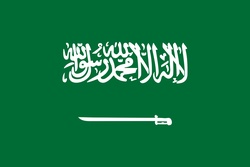
The capital is Riyadh and the flag is green, a traditional color in Islamic flags, with the Muslim creed in large white Arabic script (translated as "There is no god but God; Muhammad is the Messenger of God") above a white horizontal saber.
Saudi Arabia
About Saudi Arabia
National Olympic Committee
Climate
A considerable portion of the kingdom’s landmass consists of desert and semi-arid regions with less than two percent of the kingdom’s area being arable land The extreme arid nature of the kingdom means it has no permanent river or lake.
Interior cities like Riyadh can experience winter temperatures from 8 °C to 20 °C while those on the coast at Jeddah will experience a much warmer 19 °C to 29 °C.
During the summer months those inland will experience the hottest weather peaking at 43 °C while coastal inhabitants have a slightly cooler maximum of 38 °C.
There is very little rainfall, with annual precipitation averaging at 4 inches.
Sports
Sport is very popular activity within the Saudi society. Football is the most popular sport in the country.
Saudi NOC developed other sports such as equestrians, shooting and athletics.
Culture
The culture in Saudi Arabia is heavily influenced by the religion of Islam.
The two holiest sites in Islam are located within the Kingdom. Saudi Arabia is one of the largest religious tourism destination in the world.
Camel racing and falconry is one the important part of the Saudi culture.